
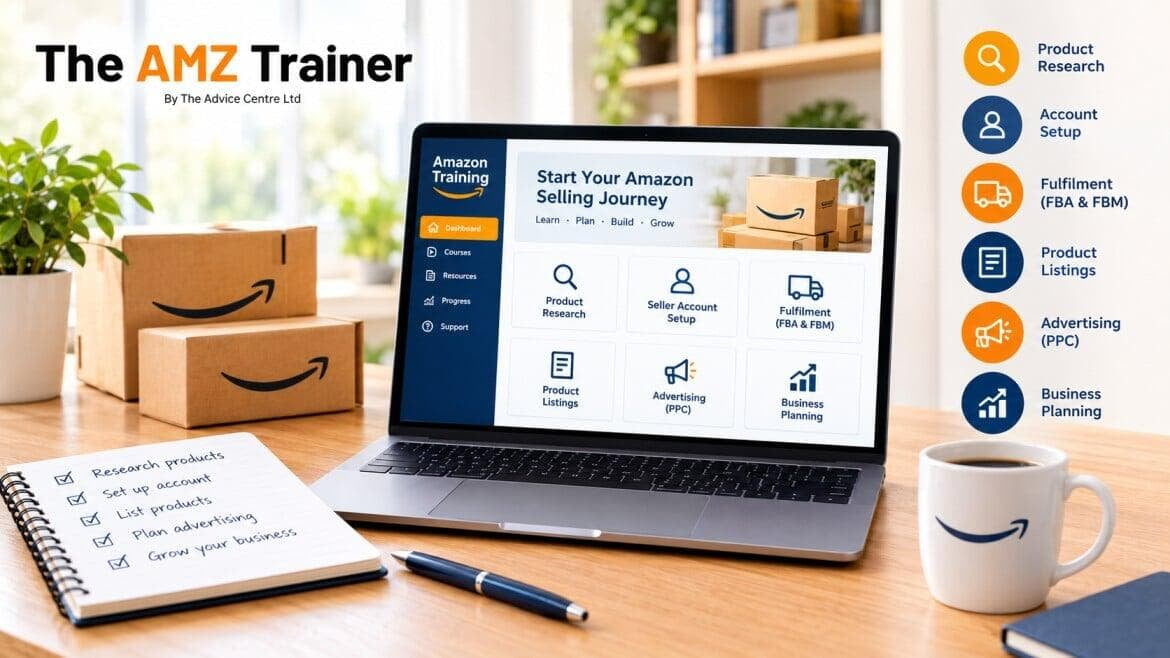
Objective
Explain how Amazon training course helps beginners understand product research, account setup, fulfilment, advertising and business costs before they start selling online.
Key Takeaways
Learn how to research products and assess demand.
Understand Amazon Seller Central, selling fees and fulfilment options.
Create clear product listings and learn the basics of Amazon SEO.
Understand advertising costs and track sales performance.
Build a practical starting plan without expecting guaranteed sales.
Introduction
Starting an online business sounds exciting, but where do you begin? You might have a product idea, a limited budget and plenty of questions about selling on Amazon. Choosing products, setting prices, managing stock and creating effective listings all take planning.
An Amazon Training Course can help you understand these tasks before you invest your money. Instead of relying on guesswork, you can learn how Amazon works and what you need to do to prepare your business for launch.
Table of Contents
What an Amazon Training Course Teaches You
How to Choose Products and Understand Costs
Setting Up Your Amazon Seller Account
Learning FBA, Product Listings and Advertising
How Training Helps You Avoid Common Mistakes
Choosing the Right Amazon Training
Frequently Asked Questions
1. What an Amazon Training Course Teaches You
An Amazon TrainingCourse provides structured guidance on starting, managing and improving an Amazon selling business. It covers the practical tasks involved in moving from a product idea to a live listing and managing customer orders.
For beginners, this can include:
Understanding Amazon Seller Central.
Researching products and competitors.
Learning about selling fees and profit margins.
Creating product listings.
Understanding fulfilment and advertising.
There is a real opportunity for businesses that prepare well. According to Amazon's UK small-business information, small and medium-sized businesses selling through its store recorded more than £3.8 billion in export sales in 2024.This demonstrates the marketplace's potential reach, although it does not guarantee results for new sellers.
Learn before you invest.
Suppose you want to sell reusable water bottles. Before ordering stock, you need to assess demand, compare competing products, estimate costs and understand whether customers have a reason to choose your product.
Training can help you work through these questions before you commit money to stock. You can explore Amazon training onlineto understand the practical skills involved in setting up and managing an Amazon business.
2. How to Choose Products and Understand Costs
Product research is one of the first skills you should learn. A product may attract plenty of interest but still leave little profit after fees, shipping and advertising.
Research demand and competition
Learn how to review competing listings, customer feedback, prices and product features. Look for a clear reason why customers might choose your product, rather than selecting an item simply because it appears popular.
Calculate your potential profit.
Before ordering stock, account for:
Product and supplier costs.
Shipping and packaging.
Amazon selling and referral fees.
Fulfilment and storage charges, where applicable.
Advertising, returns and other business expenses.
Amazon's official Revenue Calculator lets sellers estimate costs and compare fulfilment options for a product. Use current figures because fees vary by category, size, weight and selling method.
Use theAmazon UK pricing page and Revenue Calculatorto check the costs relevant to your product before committing to stock. Actual fees vary by category, size, weight, fulfilment method and selling plan.
Practical tip: Calculate your expected profit per unit before placing a stock order. If the numbers do not work at a realistic selling price, review your product choice.
3. Setting Up Your Amazon Seller Account
Once you have assessed your product idea, you need to understand the account setup process.
Learn to use Seller Central.
Seller Central is Amazon's main dashboard for managing product listings, inventory, orders and account information. Training can help you understand its main tools and complete the relevant setup steps.
Choose a suitable selling plan.
Amazon UK offers Individual and Professional selling plans. According to Amazon's official UK pricing information, the Individual plan costs £0.75 per item sold, while the Professional plan costs £25 per month, excluding VAT. Both plans are subject to applicable selling fees, including referral fees.
Check the latest prices directly on Amazon UK's official selling fees page before registering, as fees and promotional terms can change.
Check product requirements
Some products and categories have extra approval, safety or documentation requirements. Check these before buying stock, and review any relevant VAT and business obligations.
4. Learning FBA, Product Listings and Advertising
An effective training programme should explain the daily tasks involved in selling online, not just account setup.
Understand FBA and seller fulfilment.
With Fulfilment by Amazon (FBA), Amazon handles eligible storage, packing and delivery tasks for your orders. With Fulfilled by Merchant (FBM), you manage shipping yourself or use another provider.
Neither option suits every product. Compare costs, stock requirements and the time you can give to order fulfilment before deciding.
Amazon FBA support and training can help you understand the fulfilment process, including stock preparation, sending products to fulfilment centres and assessing whether FBA fits your business model.
FBA Training can help sellers understand these fulfilment options.
Create useful product listings.
Good listings give customers clear information. Learn how to write relevant titles, accurate descriptions and useful bullet points, while choosing clear product images and suitable search terms.
Amazon SEO means improving product listings so they match relevant customer searches. Relevance and clear product information matter, but rankings and sales are never guaranteed.
Learn Amazon PPC advertising.
Amazon PPC Training can help you understand sponsored ads, campaign budgets, search terms and advertising reports. Start by setting a budget you can afford and checking whether your campaigns generate sales at an acceptable cost.
These skills can also support digital marketing careers in 2026, particularly roles involving marketplace management, product content, paid advertising and sales reporting.
5. How Training Helps You Avoid Common Mistakes
New sellers can lose money when they overlook fees, order too much stock or launch listings without checking product requirements.
Training can help you build a more careful process.
Common mistake | What you should do instead |
Choosing a product based on guesswork | Research demand, competition and costs |
Ignoring selling fees | Estimate all major expenses before ordering |
Writing weak listings | Use clear, accurate product information |
Spending too much on ads | Set a budget and review campaign results |
Ordering excess stock | Start with a stock plan based on realistic demand |
For example, if your first listing receives visits but few orders, review the price, images, product information and customer feedback before buying more stock. This gives you specific areas to investigate rather than relying on guesswork.
6. Choosing the Right Amazon Training
The right course should match your goals and current knowledge. Look for practical lessons, clear explanations and guidance that reflects Amazon's current processes.
The Amazon Trainer offers training covering Seller Central, product research, FBA, listings, advertising, account performance and business growth planning. Its published options include one-to-one training in Sheffield or online, as well as a two-day London course and a live-stream option. Check the official training website for current availability and prices.
Visit the Amazon Training page to review the available programme and decide whether its content suits your experience, budget and business goals.
Before booking, ask whether the course covers your immediate needs, whether you can ask questions about your product and what support you will receive.
Build Your Amazon Business on Better Decisions
Selling online takes research, planning and ongoing work. An Amazon Training Course can help you understand the key tasks, assess costs and make informed decisions before investing in stock.
If you are ready to start, explore the available training options at The Amazon Trainer and choose a programme that fits your goals, budget and experience.
Frequently Asked Questions
1. Is an Amazon training course worth it for beginners?
It can be useful if you need structured guidance on product research, account setup, fees and fulfilment. Its value depends on the course quality and how you apply what you learn.
2. Can I learn how to sell on Amazon online?
Yes. Online training can teach you Seller Central, product research, listing creation, fulfilment and advertising. Check whether the course includes practical support.
3. How much money do I need to start selling on Amazon UK?
There is no single starting amount. Your budget depends on stock, product costs, selling fees, fulfilment, advertising and other expenses.
4. What is the difference between Amazon FBA and FBM?
FBA lets Amazon handle eligible storage and order fulfilment tasks. FBM means you manage shipping yourself or arrange it through another provider.
5. Does Amazon training guarantee sales?
No. Training can help you understand the process, but results depend on product demand, competition, pricing, product quality and how you manage your business.